Building Reliable Data Systems with Modern Automation and Better Team Collaboration
Introduction
Modern companies collect huge amounts of information every single day. They gather sales numbers, customer clicks, website visits, and inventory records. Yet, many teams struggle to use this information quickly.
Data pipelines often run slowly or break down without warning. Engineers spend hours fixing messy files by hand. Reports arrive late to business managers, and different departments see conflicting numbers. When pipelines fail silently, bad information spreads into business dashboards.
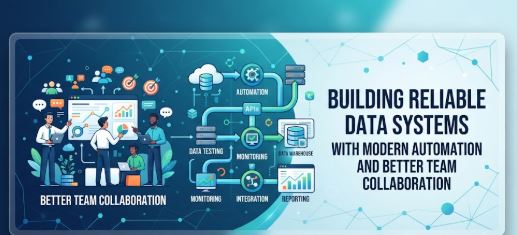
These problems happen because traditional data workflows lack testing and automation. Teams need a clear, dependable way to move and check information. DataOps solves these everyday headaches by combining smart engineering habits with automated tools.
To help people study these modern practices, TheDataOps.org provides clear educational resources for engineers and business teams alike.
What Is DataOps and Why Does It Matter?
DataOps stands for Data Operations. It is a working method that helps teams build, test, and deliver data quickly and safely.
Think of a water treatment plant in a city. River water travels through heavy pipes, passes through cleaning filters, gets tested for safety, and flows cleanly into kitchen taps. If a pipe leaks or dirt gets through, workers fix it immediately. DataOps works the exact same way for business information.
DataOps connects the people who build systems with the people who run them. It borrows core ideas from Agile software development and DevOps practices.
Instead of waiting weeks to publish one report, teams use automated routines to check and deliver small updates every day. They run automated tests to catch mistakes early. They also set up monitoring tools to watch every step.
This organized process stops manual errors, speeds up daily work, and keeps data reliable for leadership decisions.
Core Pillars of Everyday Data Operations
Continuous Integration and Automated Delivery
In traditional setups, engineers write code on personal laptops and paste it into production servers manually. That habit leads to sudden crashes.
DataOps uses Continuous Integration and Continuous Delivery, commonly called CI/CD. Whenever an engineer updates a pipeline script, an automated system checks the code.
The system runs safety checks, merges the new code, and deploys it safely. This routine removes human error and makes system updates smooth and predictable.
Automated Testing and Validation
Testing code alone is not enough in data systems. The actual values flowing through the pipes can be corrupted even when the code runs without an error.
For example, a pipeline might expect positive prices but receive negative numbers from a broken checkout page. Automated validation scripts check incoming rows instantly.
If rows are missing, duplicated, or formatted incorrectly, the system stops bad data before it reaches analytics charts.
DataOps Training
Learning modern pipeline practices requires deliberate, step-by-step practice. Comprehensive DataOps Training helps engineers understand how data engineering, cloud infrastructure, and operational reliability fit together.
Students learn how to build pipelines using Agile workflows, organize automated testing, and schedule jobs cleanly. They also discover how to monitor live systems and resolve sudden outages.
Structured learning environments help learners connect theory with production challenges. Through guided platforms like TheDataOps.org, learners explore structured materials that explain these practical workflows clearly.
DataOps Certification
Professional validation helps technical specialists confirm their operational skills. Pursuing a DataOps Certification allows engineers to demonstrate that they understand both system architecture and daily pipeline operations.
A good certification path tests practical concepts:
- Designing resilient pipeline workflows
- Implementing CI/CD pipelines for data transformations
- Managing automated data quality checks
- Configuring live system observability and alerting
- Enforcing access controls and privacy standards
While hands-on project work remains essential, studying for a recognized credential encourages professionals to build deep, balanced skills across the entire data lifecycle.
DataOps Course
A well-planned DataOps Course guides students from foundational topics to complex enterprise designs.
Learners usually begin with core basics like writing SQL queries, scripting with Python, and working in Linux environments. From there, they learn how to create data pipelines that pull raw files from external web services.
Next, students study automation, container packaging, and pipeline orchestration. Finally, the course covers live cloud deployments, automated testing suites, and real-time monitoring.
TheDataOps.org offers helpful course roadmaps that allow students to progress systematically from basic concepts to production-grade deployments.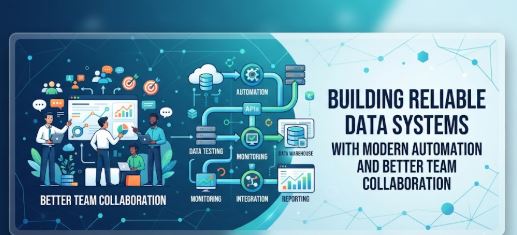
DataOps Platform
A complete DataOps Platform connects separate data steps into one unified environment.
Without a central platform, teams run ingestion in one tool, execute transformations in another, and check logs in a third. This disjointed setup creates blind spots.
A unified platform brings ingestion, cleaning, transformation, orchestration, automated testing, and governance together.
It lets engineers watch records move from raw storage to clean tables in one pane of glass. When companies need help choosing or setting up these systems, specialized DataOps Consulting offers strategic guidance to align tools with business goals.
Data Pipeline Automation
Manual data loading causes delays and typos. Data Pipeline Automation removes repetitive manual tasks by turning manual updates into scheduled, self-running workflows.
Consider an e-commerce company that tallies sales every night. With automation, a scheduler launches an extraction task at midnight.
The job pulls sales records, strips sensitive payment information, checks for missing product IDs, calculates totals, and updates the reporting warehouse.
If an error appears, the system halts the run, isolates the bad batch, and alerts on-call engineers. Nobody needs to press buttons late at night, and business analysts arrive to fresh numbers every morning.
Data Observability
Many teams only check whether a pipeline finished with a green checkmark. However, a pipeline can complete successfully while producing empty tables.
Data Observability tracks the internal health of data environments by analyzing five key dimensions:
- Freshness: Checks whether the information arrives on time.
- Distribution: Verifies that numbers fall within expected numerical ranges.
- Volume: Confirms that the expected number of rows arrived.
- Schema: Detects unexpected column removals, renames, or type changes.
- Lineage: Maps upstream sources and downstream reports to identify blast radiuses.
Observability tells engineers not just that a pipeline failed, but exactly where, why, and which business reports are affected.
Data Quality Management
Poor data produces misguided business choices. Effective Data Quality Management creates consistent rules to validate, standardize, and govern records across an organization.
Imagine a hospital network tracking patient appointments. If one clinic records birth dates as day-month-year while another records month-day-year, automated age calculations will fail.
Quality management routines detect these format differences immediately. They enforce consistent schemas, verify mandatory inputs, and eliminate duplicate files.
Clean records protect teams from costly operational mistakes and build trust with business leaders.
The Role of a DataOps Engineer
A modern DataOps Engineer builds the underlying systems, testing routines, and deployment tools that allow data teams to work safely.
These professionals bridge the communication gap between software developers, data scientists, and business analysts.
They write automation scripts, configure monitoring alerts, manage cloud environments, and fix broken pipelines. Their primary mission is making data delivery fast, secure, and resilient.
Practical DataOps Walkthrough
To see how these principles function together, follow a typical retail store scenario:
- Data Ingestion: Cash registers send daily transaction receipts into a cloud storage bucket.
- Automated Validation: A validation script checks whether all receipts have a store number, a date, and a positive total.
- Data Transformation: An Apache Spark job cleans text entries, applies tax logic, and aggregates sales by city.
- Automated Pipeline Testing: The system runs automated unit tests to confirm that tax sums match expected accounting formulas.
- Orchestrated Loading: Apache Airflow schedules the verified records into an analytical warehouse.
- Live Observability: Grafana dashboards track processing duration, row counts, and error rates.
- Business Delivery: Business managers open their morning reports with full confidence in the published totals.
Real-World Business Applications
Organizations across diverse industries use these practices to solve everyday data bottlenecks:
- Financial Services: Banks track fraudulent card charges in real time by feeding live transaction streams into automated validation pipelines.
- Healthcare Systems: Medical networks combine clinic records, lab results, and pharmacy orders while ensuring patient privacy rules are strictly met.
- Supply Chain and Logistics: Shipping firms monitor truck locations and warehouse space to reroute shipments around severe weather delays.
- Digital Retail: E-commerce stores monitor hourly customer clicks to update dynamic pricing and recommend relevant items.
Organizational Benefits
Adopting structured operational standards delivers measurable benefits:
- Accelerated Delivery: Teams release new analytical reports in hours rather than weeks.
- Higher Reliability: Automated unit and integration tests block corrupted records from entering production tables.
- Reduced Manual Overhead: Engineers spend less time fixing broken scripts by hand and more time building useful features.
- Faster Incident Recovery: Detailed observability metrics show engineers the exact root cause of any pipeline error within minutes.
- Transparent Collaboration: Clear code repositories and shared monitoring dashboards help engineers and analysts work smoothly together.
Common Challenges and Practical Solutions
Teams often encounter hurdles when modernizing their data operations:
- Tooling Overload: Teams sometimes install too many complex tools at once. Solution: Start with a simple orchestrator and basic automated tests before adding advanced platforms.
- Siloed Communication: Data scientists, engineers, and analysts rarely discuss system changes together. Solution: Establish shared Git repositories and clear communication channels.
- Neglected Legacy Systems: Outdated databases run slowly and lack automated interfaces. Solution: Build isolated connector jobs that ingest data safely into modern cloud storage.
- Skill Gaps: Team members may not understand modern version control or deployment automation. Solution: Provide structured training sessions and practical documentation.
Mistakes to Avoid
- Automating Broken Routines: Automating a flawed, messy process only produces bad data faster. Fix the underlying workflow first.
- Testing Code but Ignoring Data Values: Perfect Python code can still output invalid empty tables if incoming inputs change unexpectedly.
- Neglecting System Documentation: Failing to document pipeline connections leaves teams helpless when an engineer departs.
- Treating Operations as a One-Time Task: Modernizing workflows requires ongoing adjustments, testing reviews, and regular pipeline tuning.
Recommended Operational Best Practices
- Keep all pipeline definitions, queries, and configuration files under version control.
- Add automated validation rules to every pipeline ingestion step.
- Keep pipeline tasks small, modular, and easy to run independently.
- Set up actionable alerting thresholds so teams get notified only for real incidents.
- Document data lineage clearly so downstream users understand where numbers originate.
- Review system performance metrics monthly to locate and remove slow database queries.
Security and Governance
Data systems handle confidential records that require strict operational protection.
Modern operations apply role-based access controls to ensure workers view only the records needed for their direct duties. Engineers mask personally identifiable information before passing datasets to testing environments.
Automated audit logs track every query, transformation, and download. These protections safeguard customer privacy and help companies comply with international data regulations.
Data Operations and Modern AI
Artificial intelligence models depend completely on reliable information.
If training datasets contain duplicate rows, missing entries, or stale values, machine learning models make inaccurate predictions.
DataOps builds the stable foundation that AI models require. Automated pipelines clean training files, track data version changes, and continuously refresh input tables.
This repeatable structure ensures data science experiments remain reliable and easy to audit over time.
Who Can Benefit from Educational Resources?
- Beginners: New learners can understand foundational data terminology, pipeline architectures, and simple automation concepts.
- Data Engineers: Experienced pipeline builders can learn modern CI/CD patterns, container management, and automated testing frameworks.
- DevOps Specialists: Infrastructure experts can understand the unique requirements of stateful data systems and dynamic analytic queries.
- Analytics Professionals: Business analysts can learn how data validation and governance protect the charts they build for executives.
- Technical Leaders: Engineering managers can discover how automated quality checks reduce unplanned work and improve delivery speed.
Structuring a Practical Study Path
- Master the fundamentals of SQL queries, Python programming, and command-line tools.
- Learn how data moves from initial source APIs into analytical storage tables.
- Practice writing automated unit tests to catch invalid strings and bad numbers.
- Study orchestration platforms like Apache Airflow to schedule pipeline tasks cleanly.
- Deploy automated testing routines inside version-controlled CI/CD workflows.
- Build real-time monitoring dashboards using tools like Grafana.
- Study educational resources on TheDataOps.org to refine modern architectural patterns.
- Build end-to-end portfolio projects that demonstrate reliable data delivery.
Frequently Asked Questions
What is the main purpose of DataOps?
DataOps aims to make data delivery faster, more dependable, and higher quality. It achieves this by combining automated testing, continuous integration, smart orchestration, and team collaboration.
How does DataOps differ from traditional data engineering?
Traditional data engineering often relies on manual code updates and reactive troubleshooting after systems break. DataOps adds automated testing, continuous integration, and deep observability to catch issues before they affect end users.
What core topics are covered in professional DataOps Training?
Comprehensive training teaches engineers data pipeline creation, automated validation checks, workflow orchestration, CI/CD deployment methods, cloud infrastructure management, and system monitoring.
Does earning a DataOps Certification guarantee a job?
No certification can guarantee employment. However, earning a credential validates technical knowledge, demonstrates commitment, and complements practical hands-on project work during technical interviews.
What is the difference between data monitoring and data observability?
Monitoring simply reports whether a pipeline job is running or has failed. Observability examines the internal health of the data itself, analyzing freshness, row counts, schema alterations, and system lineage.
Which programming languages are most valuable in data operations?
Python and SQL are the most critical languages. Python powers data transformation scripts and automation jobs, while SQL allows engineers to query, clean, and validate database tables efficiently.
Why is data quality management necessary in automated pipelines?
Automated pipelines process records rapidly. Without quality management rules, corrupt numbers, duplicate rows, or missing dates will enter business reports automatically and cause flawed leadership decisions.
How do tools like Apache Airflow support pipeline automation?
Apache Airflow acts as an orchestrator. It manages task dependencies, runs pipeline steps in a strict order, retries failed tasks automatically, and alerts teams when errors happen.
Final Thought
Modern organizations cannot afford to make important decisions using broken or outdated information.
When data pipelines lack automated tests and continuous monitoring, technical teams spend their workdays reacting to unexpected errors.
Adopting DataOps transforms these fragile pipelines into dependable, automated systems. By combining continuous delivery, proactive observability, strong data quality checks, and structured teamwork, companies deliver clean information on time.
Whether you are starting out or upgrading an enterprise platform, exploring educational resources on TheDataOps.org provides clear, practical knowledge to help you build reliable data operations.