IVF Treatment Explained From Initial Assessment to Embryo Transfer
Introduction
Starting a path toward assisted reproduction can feel like learning a completely new language. For anyone exploring fertility care, the sheer volume of information can quickly become overwhelming. Patients must weigh many different factors at once, including medical procedures, diagnostic tests, clinic options, success statistics, global regulations, and financial planning.
Making sense of these details requires clear, verified, and accessible information. IVFHospitalsNow serves as an independent fertility-care education, research, and provider-discovery platform designed specifically for individuals and couples exploring assisted reproductive care. By bridging the gap between medical concepts and patient research, the platform helps individuals understand their choices clearly before sitting down for a consultation with a qualified medical specialist.
What Is IVFHospitalsNow?
IVFHospitalsNow is an educational and research resource built to support patients as they learn about, shortlist, and evaluate fertility care providers. Designed for anyone seeking reliable guidance on family-building options, the platform brings together medically reviewed educational content and independent research resources.
Rather than relying on promotional marketing or subjective popularity lists, the platform focuses on evidence-based research. It provides structured insights into diagnostic tests, reproductive technologies, treatment procedures, and global clinic options. By pairing medical education with verified provider research, transparent cost breakdowns, and properly explained outcome statistics, IVFHospitalsNow helps patients approach their fertility journey with clarity and realistic expectations.
Why Careful Fertility Research Matters
Choosing fertility care is a major personal, emotional, and financial decision. Because every individual's reproductive health profile is unique, no single factor should dictate a medical decision. Relying on a single metric—such as an advertised price, a standalone clinic review, or a high headline percentage—often leads to incomplete or misleading conclusions.
Thorough fertility research involves looking at the full picture:
- Medical procedures: Understanding which diagnostic tests or advanced laboratory techniques are required.
- Financial planning: Looking beyond initial quotes to see what services, medications, and consultations are included.
- Clinic capabilities: Evaluating laboratory standards, medical credentials, available technology, and patient support systems.
- Geographic and legal factors: Considering location, regional availability, local legal regulations, and follow-up care options.
Evaluating these elements together helps patients avoid unexpected costs, understand realistic outcomes, and hold productive conversations with fertility doctors.
Understanding Fertility Care: Treatments, Outcomes, Costs, and Provider Research
Understanding the IVF Treatment Journey
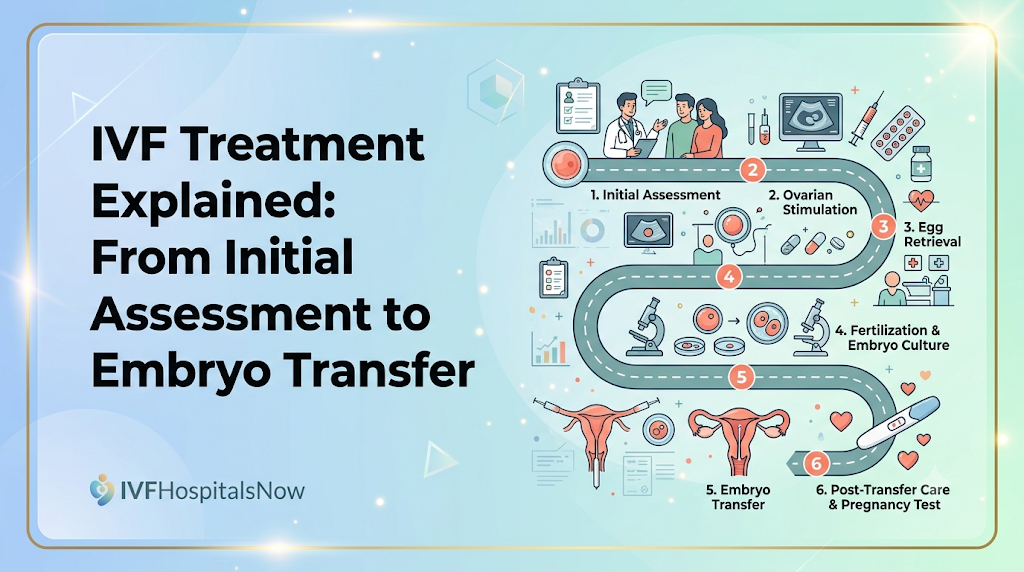
In vitro fertilization (IVF) is an assisted reproductive technology where an egg is fertilized by sperm outside the body in a specialized laboratory environment. While specific protocols are tailored by doctors to match a patient's medical profile, the general process follows several core steps:
- Initial Assessment and Testing: Doctors perform blood tests, ultrasounds, and semen evaluations to check ovarian reserve, hormone levels, and reproductive health.
- Ovarian Stimulation: The patient takes fertility medications over 8 to 14 days to encourage the ovaries to mature multiple eggs instead of the single egg produced in a natural cycle.
- Egg Retrieval: Once mature, eggs are collected from the ovaries during a brief, minor surgical procedure using ultrasound guidance.
- Fertilization: Collected eggs are combined with sperm in the laboratory using either standard insemination or specialized techniques.
- Embryo Development: Fertilized eggs (embryos) are carefully monitored in an incubator for 3 to 6 days as they grow.
- Embryo Transfer: One or more healthy embryos are placed gently into the patient's uterus. Any remaining high-quality embryos may be frozen for future use.
- Pregnancy Test: A blood test measuring human chorionic gonadotropin (hCG) levels is performed roughly 10 to 14 days after the transfer to confirm pregnancy.
Every step requires careful monitoring, and exact treatment plans vary depending on individual medical needs.
Understanding IVF Treatment Cost
Financial transparency is one of the most critical aspects of fertility planning. The total IVF treatment cost is rarely a single static figure because care plans involve multiple clinical, laboratory, and pharmacological components.
Key factors that influence overall expenses include:
- Diagnostic Testing: Initial blood work, genetic screening, and imaging procedures required prior to starting care.
- Medications: Hormonal stimulation drugs, which vary significantly in price based on required dosage and response.
- Laboratory Procedures: Advanced techniques such as blastocyst culturing, embryo freezing, and preimplantation genetic testing (PGT).
- Package Inclusions: Whether a quoted price covers anesthesia, ultrasound monitoring, embryo transfer, and blood tests, or if those are billed separately.
- Cycle Volume: The potential need for more than one stimulation or transfer cycle to achieve success.
When reviewing financial estimates, patients should always request a detailed line-item breakdown to ensure fair price comparisons across providers.
Reading IVF Success Rates Correctly
When exploring care options, patients often look closely at IVF success rates, but these statistics require careful interpretation. A single percentage point cannot account for individual biological factors or guarantee a personal outcome.
When analyzing published statistics, consider the following context:
- Patient Age and Diagnosis: Younger age groups generally show higher success percentages per cycle, whereas underlying factors like diminished ovarian reserve or severe male factor infertility alter statistical baselines.
- Reporting Definitions: A "pregnancy rate" (a positive pregnancy test) is not the same as a "live birth rate" (a delivered baby). Furthermore, statistics may be reported per started cycle, per egg retrieval, or per embryo transfer.
- Cycle Type: Outcomes vary between fresh embryo transfers, frozen embryo transfers, donor egg cycles, and autologous (own egg) cycles.
Comparing clinic statistics without understanding these reporting criteria can create a misleading impression of clinical performance.
Researching IVF Clinics
When evaluating IVF clinics, research should center on operational transparency, medical expertise, and laboratory quality rather than promotional claims or superficial rankings.
Key research areas include:
- Medical Credentials: Verification of board certifications, doctor experience, and specialized training.
- Laboratory Standards: Quality control standards, embryology team credentials, and available laboratory technologies.
- Patient Communication: Clarity regarding treatment paths, responsive support staff, and clear educational materials.
- Transparent Outcomes: Willingness to provide audited, clearly categorized outcome data matching specific age groups and treatment types.
How to Compare Fertility Clinics
To compare fertility clinics objectively, compile structured information across several operational categories rather than relying on a single metric:
- Verify whether the facility holds up-to-date regional accreditations and verified provider status.
- Assess whether the medical team has experience managing your specific diagnosis.
- Compare financial worksheets to ensure you are measuring identical packages of care.
- Evaluate the accessibility of the clinic, including location, travel requirements, and communication protocols.
Researching IVF Abroad
Many individuals explore IVF abroad to access specific treatments that may not be locally available, to manage costs, or to work with specific international specialists. However, medical travel requires additional research and planning.
Important cross-border considerations include:
- Legal Regulations: Laws regarding donor anonymity, egg/sperm donation, age limits, and embryo storage vary widely by nation.
- Continuity of Care: Establishing how monitoring, prescriptions, and early pregnancy follow-up will be handled between your home doctor and the foreign clinic.
- Travel and Logistics: Accounting for flight schedules, extended stays, language barriers, and stress management during treatment.
Understanding IVF Cost by Country
The standard IVF cost by country can fluctuate significantly due to regional economic factors and national healthcare policies.
Variations are typically driven by:
- Local labor and operational expenses for medical facilities.
- Regional price regulation for pharmaceutical products and fertility medications.
- Government subsidies or public healthcare funding models.
- Legal requirements governing laboratory testing and documentation.
While international pricing averages offer general context, individual treatment needs ultimately dictate the final financial commitment regardless of location.
Egg Freezing and Fertility Planning
Preserving fertility through egg freezing (mature oocyte cryopreservation) allows individuals to extract and store eggs for potential future use.
Key aspects of egg freezing include:
- The Process: Involves ovarian stimulation and egg retrieval identical to the initial phases of standard IVF, after which the collected eggs are frozen using vitrification (a flash-freezing technique).
- Age Considerations: Egg quality and quantity naturally decline with age. Therefore, freezing eggs at an earlier age typically yields a higher chance of future viability.
- Realistic Expectations: Cryopreservation offers a reproductive option for the future, but it does not guarantee a live birth. Future success depends on egg quality, survival during thawing, fertilization rates, and healthy embryo development.
Understanding ICSI Treatment
Intracytoplasmic Sperm Injection (ICSI treatment) is a specialized laboratory procedure developed to assist fertilization within an IVF cycle. Unlike standard insemination—where sperm are placed alongside an egg in a dish to fertilize naturally—ICSI involves selecting a single healthy sperm and injecting it directly into the center of a mature egg.
This approach is frequently evaluated when dealing with:
- Low sperm count, poor sperm motility, or abnormal sperm morphology.
- Previous unexplained failed fertilization during standard IVF cycles.
- Cases utilizing surgical sperm retrieval or frozen sperm with limited availability.
While ICSI addresses specific fertilization challenges, a fertility doctor will determine whether it is clinically necessary based on diagnostic evaluations.
Exploring Fertility Treatment Options
Assisted reproduction includes a broad spectrum of medical approaches. Patients work alongside medical professionals to explore diverse fertility treatment options based on their diagnostic results:
- Fertility Testing and Ovulation Monitoring: Identifying hormonal imbalances, tubal blockages, or ovulation timing issues.
- Medication-Based Therapies: Oral or injectable medications used to stimulate or regulate ovulation.
- Intrauterine Insemination (IUI): Inserting washed sperm directly into the uterus around the time of ovulation.
- In Vitro Fertilization (IVF): Full-cycle fertilization occurring within a specialized laboratory setting.
- Advanced Assisted Technologies: ICSI, genetic screening (PGT), egg freezing, and donor-assisted reproduction.
Selecting an appropriate care path requires thorough medical diagnostic testing and expert clinical judgment.
Using Information Before Choosing a Provider
Educating yourself on fertility concepts empowers you to take an active role in your medical care. By gathering verified research before your initial medical consultation, you can:
- Learn fundamental terms so you can follow technical discussions comfortably.
- Prepare a targeted list of practical questions regarding diagnostic testing and treatment paths.
- Understand how treatment packages are structured to avoid unexpected financial surprises.
- Review clinic verification status and outcome data to discuss suitability for your personal diagnosis.
Practical Research Process
To research fertility care systematically, consider following this streamlined 5-step process:
- Identify Medical Priorities: Complete baseline fertility testing with a doctor to understand your diagnostic needs and general care categories.
- Gather Educational Information: Research procedures, diagnostic requirements, potential costs, and statistics using reliable, evidence-focused platforms.
- Shortlist Verified Providers: Identify clinics that offer the required medical services, hold clear verification status, and maintain transparent reporting.
- Compare Operational Factors: Evaluate candidates based on comprehensive package pricing, laboratory standards, location, and patient communication—rather than a single statistic.
- Consult Medical Specialists: Present your research, diagnostic history, and questions to qualified fertility doctors to determine an individualized care plan.
Common Research Mistakes
Avoiding common analytical pitfalls ensures a smoother research experience:
- Focusing Solely on Headline Prices: Choosing a provider based on a low initial estimate without verifying if medications, laboratory fees, or anesthesia are included.
- Treating Success Rates as Guarantees: Assuming a high overall clinic success percentage guarantees an individual pregnancy outcome regardless of personal health factors.
- Ignoring Treatment Package Details: Comparing quotes from different clinics without ensuring both include the exact same procedural and diagnostic steps.
- Overlooking Legal and Follow-Up Logistics: Selecting international care options without evaluating local legal regulations or how post-treatment care will be coordinated at home.
- Relying on Unverified Promotional Sources: Basing critical medical choices on unsourced lists, sponsored reviews, or unverified claims.
Realistic Example
Consider a couple researching fertility care who begin by reviewing average procedure estimates across several regional and international options.
Initially, one clinic appears significantly less expensive than others. However, upon examining the detailed breakdown of services, the couple notices that the lower quote excludes mandatory stimulation medications, embryo freezing, and initial blood work.
Instead of choosing solely on the initial number, they gather itemized price lists, review verified outcome statistics matching their age group, check doctor qualifications, and discuss these comparative findings during a professional consultation with a qualified specialist to select a well-suited care plan.
Frequently Asked Questions
What factors affect IVF treatment cost?
Total expenses depend on required hormonal medications, diagnostic testing, laboratory techniques (such as ICSI or genetic screening), embryo freezing/storage fees, clinic pricing structures, and geographic location.
How should IVF success rates be interpreted?
Success rates should be evaluated alongside patient age, specific medical diagnosis, treatment type, and reporting standards (such as live birth rate per transfer versus positive pregnancy test per cycle).
What should I check when researching IVF clinics?
Look for verified medical credentials, transparent financial breakdowns, laboratory standards, clear patient communication, and audited outcome data categorized by age group.
How can patients compare fertility clinics fairly?
Compare clinics across multiple dimensions—including package inclusions, specialist experience, location, laboratory capabilities, and verification status—rather than relying on a single ranking or headline statistic.
What should be considered before researching IVF abroad?
Evaluate country-specific legal regulations, language support, travel logistics, overall costs (including travel and accommodation), clinic verification, and how follow-up care will be coordinated with doctors at home.
Why does IVF cost by country vary?
Pricing variations reflect regional healthcare system structures, local operational costs, medication price regulations, tax frameworks, and national policy differences.
What is egg freezing?
Egg freezing is a process where a person's eggs are retrieved, frozen via vitrification, and stored for potential use in future fertility treatments.
What is ICSI treatment?
Intracytoplasmic Sperm Injection (ICSI) is a specialized technique where a single sperm is injected directly into a mature egg to assist fertilization during an IVF cycle.
What are the main fertility treatment options?
Options range from ovulation monitoring and fertility medications to intrauterine insemination (IUI), in vitro fertilization (IVF), ICSI, egg freezing, and donor-assisted reproductive care.
Does a higher success rate guarantee a successful IVF outcome?
No. Standardized success rates represent broad population statistics. Individual outcomes depend entirely on personalized medical, biological, and clinical factors.
Conclusion
Navigating fertility care requires balancing medical facts, clear financial planning, and personal expectations. Educating yourself on treatment steps, cost components, statistic reporting methods, and international options allows you to make sense of a complex landscape.
Utilizing independent research resources like IVFHospitalsNow helps clear away confusion, providing verified provider information and clear educational context. Ultimately, collecting sound information serves as the foundation for thoughtful research—preparing you to hold meaningful, informed discussions alongside qualified fertility medical professionals.