MyEventNow: How to Find, Book, and Manage Events Online
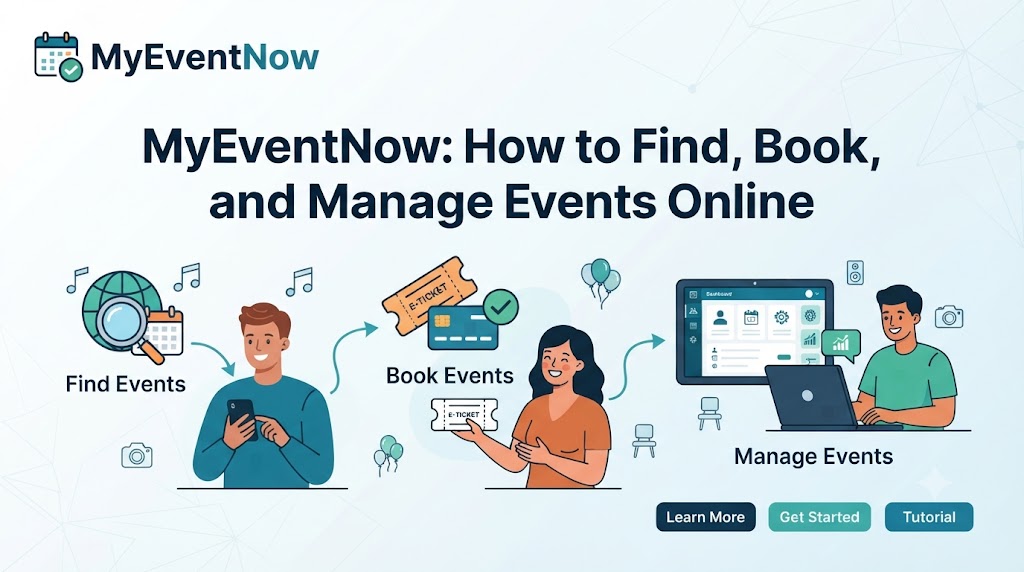
Anyone who has tried to plan a weekend outing knows how scattered event information can be. One show is posted on a poster, another in a social media story, and a third only through a group chat. Even when you find something you like, you still have to work out the time, the venue, and how to get a ticket. Organizers have a similar challenge in reverse. They need to explain the event clearly, collect registrations, and keep track of everything as the date gets closer.
MyEventNow is designed to reduce this back-and-forth. It combines event discovery, ticket booking, and organizer tools in one marketplace, so attendees and event creators can use the same platform from different directions. This guide explains what the platform offers and where it fits into everyday event planning.
What Is MyEventNow?
MyEventNow is an online platform where people discover events, register or buy tickets, and where organizers publish and manage their events. It serves four groups at once: attendees, event organizers, businesses, and community groups.
For attendees, the platform works like a browsing space. Visitors can look through local and upcoming events, read the information given for each one, and move on to registration or ticket purchase. The event types include concerts, comedy shows, festivals, workshops, exhibitions, conferences, seminars, webinars, theatre productions, and community gatherings.
For organizers, it works as a working space. They can create event listings, set up ticket options, publish schedules, handle registrations, organize attendee details, keep an eye on bookings, and review how an event is doing through centralized dashboards. The two sides support each other: what an organizer publishes is what an attendee sees and books.
Why Easier Event Discovery and Booking Make a Difference
Choosing an event is rarely a quick decision. People weigh the date, the location, the type of experience, and who they are going with. When the details are hard to find, many simply give up and stay home.
Here are a few everyday situations where a single, organized platform helps:
- A person who has moved to a new city and wants to explore what is happening nearby.
- Friends trying to compare two or three shows before picking one for Saturday night.
- A young professional looking for a seminar or workshop that supports their career.
- A parent searching for a community event that suits the whole family.
In all of these cases, the real problem is not a lack of events. It is the time spent collecting scattered information. A platform that places event details in one location shortens that process.
Organizers face the other half of the issue. A well-planned event still needs a clear public page that explains what it is, when it happens, and how people can join. Without that, interested people may not take the next step.
What MyEventNow Offers Attendees and Organizers
Finding Activities Close to You
Most people who type events near me into a search bar want a practical answer for the coming days. They might be open to a live gig, a pottery class, a food festival, a play, an art exhibition, or a neighborhood fair.
MyEventNow supports this by presenting events with their descriptions, timings, and venue information. Because events are grouped by type, visitors can begin with what they feel like doing, whether that is learning something new, watching a performance, or meeting people with shared interests.
A clear listing also protects attendees from disappointment. Knowing the format and location ahead of time helps people choose events that genuinely suit them.
Looking Ahead in Major Indian Cities
Planning ahead is easier when you can see what is coming. Anyone interested in upcoming events in India can explore listings connected to cities such as Mumbai, Delhi, Bengaluru, Hyderabad, Pune, Chennai, Kolkata, and Ahmedabad.
Different people use this in different ways. A student might look for a cultural program on campus weekends. A business traveler may check whether a networking evening falls during a short stay. A family planning a holiday could look for festivals or performances in the city they are visiting.
Since listings come from organizers, the mix of events and dates will differ from city to city and week to week. Reading each listing is the best way to confirm what is actually available.
Music Events and Live Shows
Live music appeals to many tastes, from large festival-style gatherings to quiet cultural evenings. When people look for concert tickets online, the most useful habit is to read the listing carefully before choosing.
Look at the event description to understand the style of the show. Check the venue and the schedule to see whether travel and timing are realistic. Then review the ticket options shown on the listing so you know what you are selecting.
These small checks take a couple of minutes, yet they often decide whether the evening is relaxed or stressful.
Comedy, Theatre, and Other Stage Experiences
Stand-up nights, theatre productions, and other live performances are popular because they work for many group sizes. A couple, a group of colleagues, or a few friends can all enjoy the same show.
Before buying comedy show tickets, think about the type of performance, the date, the venue, and any information the organizer has provided about the event. A performance that fits your schedule and location is more likely to be enjoyable than one chosen in a rush. The same approach applies to theatre and other live formats, where the listing description should help you understand what to expect.
From Browsing to Booking
Online event ticket booking is most useful when the path from interest to confirmation is easy to follow. On MyEventNow, an attendee can find an event, read its details, pick the registration or ticket option offered, and complete the booking.
What matters most is clarity. People want to know what they are paying for, when the event takes place, and where to go. Having discovery and booking in the same marketplace means these questions can be answered without moving between unrelated pages.
Because every event is set up by its organizer, the exact steps and options can differ. Attendees should follow the instructions shown for the listing they choose.
A Ticketing Setup for Organizers
As an event ticketing platform, MyEventNow lets organizers build a public listing, add the details attendees need, set up ticket options, and publish the schedule. Listings can also be shared, which gives organizers a simple way to point people toward the event page.
This suits a wide range of users:
- Independent organizers running their first show or class.
- Businesses hosting customer meetings or launches.
- Schools and colleges arranging talks, fests, or training days.
- Agencies handling events for several clients.
- Community groups organizing local meetups and celebrations.
A single listing page keeps the main facts together, which makes it easier for potential attendees to understand and trust what is being offered.
Keeping Everything in One Dashboard
After an event is live, the work shifts to coordination. MyEventNow acts as event management software by giving organizers a central place to handle registrations, ticket sales, attendee information, schedules, and performance reports.
Think about what happens without that. Registration names end up in a spreadsheet, ticket numbers in a notebook, and schedule updates in dozens of messages. A central dashboard replaces that patchwork with one place to look.
The reports give organizers a way to see how an event performed, which can help when planning the next one. What those reports include is shown in the organizer's own dashboard.
Registration for Learning and Professional Events
Not every event is meant for entertainment. Many exist to teach, train, or connect people. An event registration platform helps organizers run conferences, seminars, workshops, training programs, webinars, business events, and networking meetups.
The main benefit is organized attendee information. When people sign up through a set process, the organizer has a clear record of who plans to attend.
Some practical examples:
- A university department hosting a guest lecture can track how many students and faculty members have registered.
- A software company running a product training session can keep participant details in one place.
- A coaching institute offering a short certification workshop can monitor sign-ups for each batch.
Publishing Your Event the Right Way
Organizers who want to list your event online should start with accuracy. A strong listing has a plain-language description, the correct date and time, the venue, and ticket details that are easy to read.
On MyEventNow, independent organizers, event agencies, businesses, educational institutions, and community groups can publish their activities in this structure. Shareable listings let them pass the event page along through messages, social posts, or newsletters.
No platform can promise a certain number of visitors or sign-ups. Results depend on the event, the quality of the information, and the organizer's own promotion. What the listing provides is a clear and consistent way to present the event.
Handling Ticket Sales and Availability
Organizers who want to sell event tickets online need to think beyond publishing a price. They also need to keep availability and event details current while watching how bookings progress.
MyEventNow supports publishing ticket information, managing event availability, monitoring bookings, and promoting events through shareable listings. A useful rule is to update the listing whenever something changes. If the start time moves or a ticket option is adjusted, attendees should see that on the page. Clear and current information builds confidence and cuts down on repeated questions.
Getting Started: A Short Walkthrough
If you are attending an event:
- Open the platform and look through the available events.
- Narrow your search by location or category.
- Read the description, schedule, and other details on the listing.
- Choose the registration or ticket option that suits you.
- Complete the booking as the platform guides you.
If you are organizing an event:
- Gather the description, date, venue, and schedule.
- Create the listing and set up ticket options.
- Publish the event.
- Share the listing with the people you want to reach.
- Use your dashboard to follow registrations and bookings.
Easy-to-Miss Mistakes for Attendees and Organizers
Most event problems come from small details that were overlooked.
Attendees often run into trouble when they:
- Skim past the date or venue.
- Overlook details about the event format.
- Pick an event type that does not match what they were hoping for.
Organizers tend to face problems when they:
- Publish a listing with missing information.
- Write ticket descriptions that leave people guessing.
- Forget to update the schedule after a change.
- Go too long without reviewing registration and booking details.
Fixing these habits costs very little time. In return, attendees arrive better prepared and organizers spend less effort answering questions that the listing should already cover.
A Hypothetical Scenario: A Business Seminar
Suppose a small accounting firm wants to host a half-day seminar on tax planning for local shop owners. A team member writes a short description, confirms the date, time, and venue, and decides on the ticket options. They then create the listing on MyEventNow, add the agenda, and publish it. To spread the word, they share the listing link with their client contacts and business groups.
A shop owner who is looking for useful business sessions comes across the seminar. She reads the agenda, checks that the venue is easy to reach, and selects the ticket option that fits her. She completes the registration.
On the firm's side, the team opens the dashboard to check how many people have signed up and to see attendee details in one place. When the start time shifts by thirty minutes, they edit the listing so that registered and prospective attendees see the right schedule.
Frequently Asked Questions
What can I do on MyEventNow?
You can discover events, review their details, and register or buy tickets. Organizers can also create listings and manage their events.
Is it possible to find events in my city?
Visitors can browse local and upcoming events. What appears depends on the listings organizers have published.
Which kinds of events are covered?
The platform includes concerts, comedy shows, festivals, workshops, exhibitions, conferences, seminars, webinars, theatre productions, and community gatherings.
How does an organizer get an event online?
They create a listing, add the event information, set up ticket options, and publish the schedule.
Can attendees pay and book through the platform?
Yes, attendees can register or purchase tickets for events. The steps follow what each listing provides.
What can organizers manage after publishing?
They can handle registrations, ticket sales, attendee information, schedules, and performance reports through centralized dashboards.
Is it suitable for professional or educational events?
Yes. Businesses, schools, colleges, and training providers can use it for conferences, seminars, workshops, and similar events.
Can a small or independent organizer use it?
Yes. Independent organizers can publish ticket information and manage bookings for their own events.
Conclusion
MyEventNow gives attendees and organizers a shared place to work. Visitors can explore concerts, comedy shows, workshops, festivals, and professional events, check the details, and book, while organizers can publish listings, set up tickets, share their events, and manage registrations from one dashboard.
The platform will work best when organizers provide complete and accurate information and attendees take a moment to read it. Together, those habits turn event discovery and booking into a simple, dependable process for everyone involved.