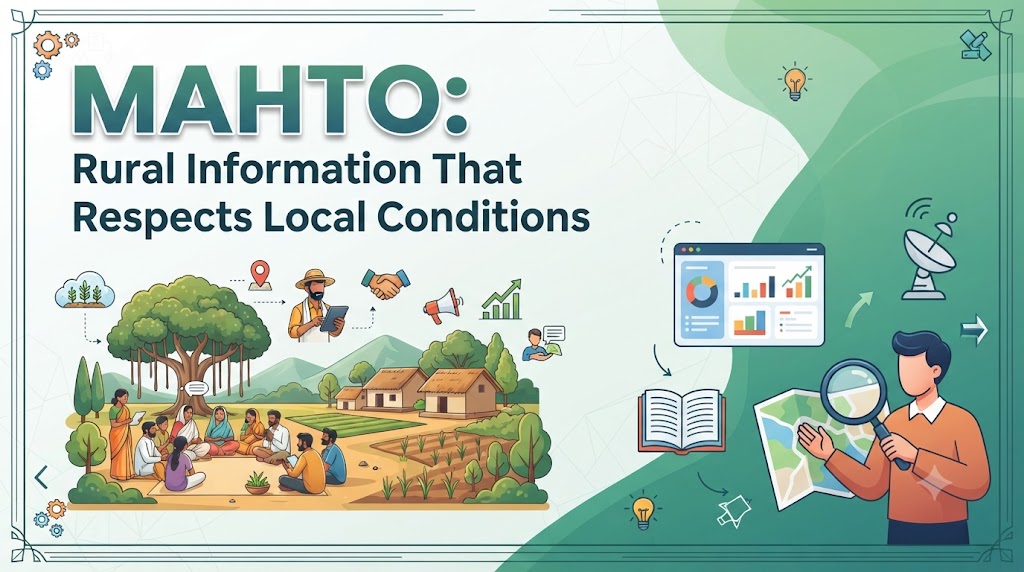
MAHTO: Rural Information That Respects Local Conditions
 Introduction
The same farming question can have different answers in different villages. A sowing date that suits one district may be too early in another. A market rate that looks good in one mandi may not be available in the next. A scheme described in general terms may work differently once state rules are added.
MAHTO is a rural knowledge platform that covers these subjects: agriculture, farmer schemes, livestock, mandi prices, weather guidance and village business opportunities. This article looks at each area and points out what usually stays the same and what changes with the place, so that readers know where to look for the details that matter to them.
What Is MAHTO?
MAHTO is a Hindi-first platform for Indian farmers, agricultural families, rural entrepreneurs and village communities. It tries to explain useful topics in simple language, without the heavy official or technical wording that makes many documents hard to follow.
The platform’s subject areas include:
- Crop guidance, irrigation, soil testing, fertilizers, pest control and crop calendars
- Farmer scheme topics such as PM-Kisan, PM Fasal Bima Yojana, Kisan Credit Card, Soil Health Card and state-level schemes
- Livestock topics such as dairy, poultry, fish and goat farming, vaccination and animal nutrition
- Mandi-price information and village business ideas
Plain explanations help readers who find technical or official language difficult. They also help people see how the subjects connect. Crops decide income, income affects borrowing, and animals or small businesses can bring in more than one source of earning.
Why Reliable Rural Information Matters
Rural households make decisions with limited savings, so mistakes can be costly. Reliable information shows readers what a scheme requires, how a rate should be read, what animals need and what a new activity may cost.
It also reminds them that facts do not stay still. Scheme rules are revised, rates move and conditions differ from place to place. Because of this, general guidance should always be read together with current official details and local advice.
What Stays the Same and What Changes With the Place
Crop Guidance and the Local Field
Farming information in Hindi can explain the main parts of crop work: crop selection, soil preparation, irrigation, fertilizer use, pest control, seasonal planning and harvest preparation. A soil test is a practical starting point because its report gives facts about the soil.
Stays the same: the basic stages of crop work and the value of testing soil.
Changes locally: the right crop variety, timing, water supply and fertilizer needs, which depend on soil, weather and local conditions.
Scheme Rules and Where You Live
The government schemes for farmers cover areas such as income support, crop insurance, credit and soil health. For any scheme, readers should look at eligibility, the benefit, required documents, the application route and the way to follow the status.
Stays the same: the questions worth asking about every scheme.
Changes locally: state-level programmes, local offices and the documents asked for in practice. No family should assume it qualifies for every scheme.
Verification Under PM-Kisan
PM Kisan eKYC is the identity verification step linked with the PM-Kisan scheme. It helps ensure that the benefit reaches the correct and verified beneficiary.
Stays the same: the purpose of verification and the need to keep beneficiary details correct.
Changes over time and place: the available methods, dates and portal features, so readers should follow only current official instructions or ask a common service centre or the local agriculture office.
Farm Credit and the Bank in Your Area
The Kisan Credit Card is meant to help eligible farmers get credit for farming-related needs. Before applying, a farmer should find out the eligibility rules, required documents, interest conditions and participating banks.
Stays the same: the need to understand repayment before borrowing.
Changes locally: the bank’s terms, the documents it asks for and its assessment of the credit limit. Approval cannot be promised.
Paddy Practices From Region to Region
Readers who want to know how to grow paddy will find a common order of work. A variety suited to the region, season and water supply is chosen. The field is prepared and levelled. Where transplanting is used, seedlings are raised in a nursery first, while direct sowing skips that step. Water and nutrients are managed through growth, weeds and pests are watched, and harvest is planned for the right maturity.
Stays the same: the sequence of stages.
Changes locally: timing, water use and the choice of method, depending on region, soil, climate and variety.
Goat Rearing in Different Climates
Those asking how to start goat farming should first make a plan. Decide the purpose, whether meat, milk or breeding, and how many animals can be managed. Prepare dry, clean housing, steady feed and fresh water. Arrange veterinary support for vaccination and disease prevention, and keep records of breeding and health. Add up starting and monthly costs and check the demand for goats nearby.
Stays the same: the need for planning, housing, feed and records.
Changes locally: the breeds that suit the climate, the feed available through the year and the local market. Income cannot be fixed in advance.
Organic Methods and Local Soil
Farmers interested in how to start organic farming usually start with the soil. Compost, crop rotation, careful pest management and lower reliance on synthetic inputs, where suitable, are the central ideas.
Stays the same: the focus on soil health and gradual change.
Changes locally: which inputs are suitable, what pests appear and who will buy the produce. If it is sold as certified organic, certification requirements must be checked early. Organic farming is not automatically cheaper or more profitable.
Animal Care and Local Veterinary Support
Useful livestock farming information stresses balanced feed, clean water, clean and airy housing, vaccination, disease prevention, breeding management and regular veterinary care, whether the animals are dairy cattle, poultry, fish or goats.
Stays the same: the basics of nutrition, housing and prevention.
Changes locally: common local diseases, vaccination timing and access to a veterinarian. If an animal is unwell, a qualified veterinarian should be called, as treatment based on unchecked advice can cause harm.
Business Ideas That Fit the Village
Families exploring village business ideas may consider dairy activities, poultry, goat rearing, food processing, local services or support work for farmers. For each, ask whether people nearby will buy, how much money is needed, what skills are available, what the monthly costs will be and what risks exist.
Stays the same: the need to count costs and test demand.
Changes locally: what the village actually needs and who is already offering it. Earnings cannot be guaranteed, and starting small is safer.
Taking the Local View to an Adviser
Information becomes more useful when you carry local details to the right person. Before meeting an agricultural officer, a bank officer, an extension worker or a veterinarian, write down your questions, your land and animal details, and the documents you may need. These professionals can confirm current rules and advise on your own situation.
Five Stages From Question to Action
- Write down the exact question.
- Gather recent information from reliable sources.
- Confirm it against official requirements and local conditions.
- Compare the options, costs and risks.
- Consult a qualified local adviser before acting.
Missteps and Their Likely Effects
- Using outdated scheme details: wasted visits or an application that must be redone.
- Leaving out a document: delays while papers are collected again.
- Believing a mandi rate without its date and unit: a selling decision based on the wrong figure.
- Copying a method from another region: poor fit with your own soil and water.
- Buying animals without a cost plan: feed and care expenses that were not expected.
- Expecting quick profit from a new business: pressure when early months are slow.
- Treating animals on unverified advice: a health problem that grows worse.
Hypothetical Example: Reviewing a Weak Harvest
After a disappointing harvest, a farmer wants to understand what to change. He begins with a soil test and takes the report to the agriculture office. He compares the season’s rainfall with what his crop needed and asks whether the variety suited the area. He also reads about crop insurance under PM Fasal Bima Yojana and checks, through official sources, whether it applies to his crop and location. With these answers, he decides to change one thing at a time next season so that he can see what actually makes a difference.
Questions Readers Often Ask
Why is local advice mentioned so often?
Soil, climate, water and markets differ from place to place. General guidance gives the outline, and local advice fits it to your field.
Can a mandi rate seen one day be used the next day?
It is safer not to. Rates change over time, so look for a recent figure and confirm it before deciding.
Does crop insurance cover every crop and area?
Coverage and conditions are set by the scheme. Check the current official details for your crop and location.
How can a farmer begin improving soil health?
Start with a soil test, then ask an agricultural expert about compost, crop rotation and suitable inputs for your soil.
Which costs are easy to forget when keeping goats?
Veterinary visits, vaccination, shelter repairs, feed during dry months and transport are often overlooked, so include them in the budget.
How can I tell whether a village business idea fits my area?
Ask nearby people whether they would buy, see what is already available locally and estimate costs before committing.
Conclusion
General information can point a reader in the right direction, but the final answer for any rural decision comes from three places: the official source for rules, the local expert for conditions and the reader’s own field or animals for what is actually happening. MAHTO’s role is to explain the subjects clearly enough that readers can approach those three sources with better questions.