DevOps Maturity Assessment Method, Metrics and Next Steps
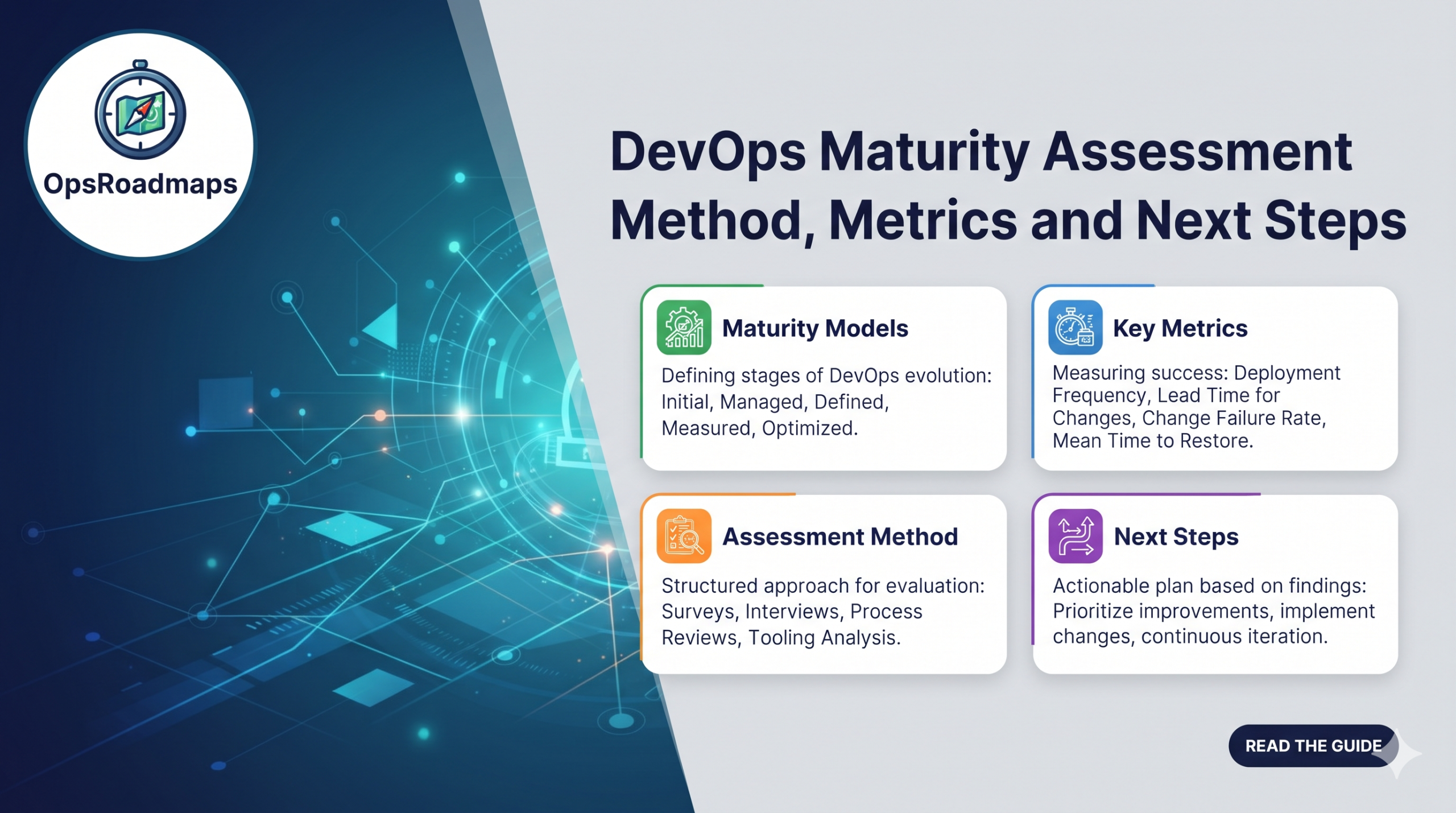
A DevOps maturity assessment is a structured review of how well a team builds, tests, releases, and runs software. It shows which practices already work, which ones are missing, and where a small effort could bring the biggest gain.
Many teams skip this step and jump straight to buying tools. That often leads to more tools and the same problems. A good assessment starts with facts about your own way of working. This article explains what to measure, how to run the review, how to read the results, and how to turn them into a plan.
When a Team Should Run One
An assessment is useful at certain moments:
- Releases feel slow or stressful, and nobody can say exactly why.
- The team is growing, and each group works in a different way.
- A new platform, a cloud move, or a larger project is coming.
- Leaders want a fair picture of where to invest time and money.
- Several incidents have a similar cause, and the team wants to find the pattern.
If everything works well and nothing is changing, a lighter check once or twice a year may be enough.
How to Run the Assessment in Five Steps
Step 1: Set the Scope and the Goal
Decide which teams and systems you will review, and what you want to learn. A narrow, clear scope works better than a vague one. For example, "the checkout service and its release process" is easier to assess than "everything."
Step 2: Gather Evidence, Not Opinions
Ask each question and then look for proof. If someone says, "We always review code," check the review settings and a sample of recent changes. Useful sources include pipeline logs, release notes, incident records, and access settings.
Also talk to the people who do the work. They often know about gaps that no report shows.
Step 3: Rate Each Area Honestly
Use a simple scale, such as "in place," "partly in place," and "not in place." Keep notes on why you chose each rating. Honest ratings are more useful than flattering ones.
A self-assessment reflects what your team reports and the evidence it can show. It is not an independent audit, a formal certification, or a promise of compliance.
Step 4: Look for Patterns
Individual ratings matter less than the patterns they form. The next section shows common examples.
Step 5: Share the Results and Agree on Actions
Present findings in plain language, with evidence. Then agree on a short list of actions with owners and dates. A report that nobody acts on is wasted effort.
Turning Results into a Plan
Do not try to fix everything. Rank each gap by four questions:
- Risk: How bad is it if this fails?
- Impact: How many users or teams does it affect?
- Effort: How long will the fix take?
- Dependencies: Does another fix need to happen first?
Often, one fix unlocks others. For example, reliable automated tests make faster releases safe, and clear monitoring makes quick recovery possible. Order your actions so that these enablers come first.
Then set a review date. Run the assessment again after a few months, compare the results, and adjust the plan. Treat it as a cycle, not a one-time event.
Mistakes That Make Assessments Less Useful
- Rating without proof. Opinions alone can be too optimistic.
- Judging teams against each other. Each team has different systems and risks.
- Chasing a score. The goal is better delivery, not a higher number.
- Looking only at tools. Habits, ownership, and communication matter as much.
- Skipping the follow-up. Findings without owners and dates lead to no change.
A Hypothetical Example
A team builds the backend for a delivery company's mobile app. They release several times a week, but about one in four releases needs a quick fix. Their assessment finds that automated tests cover only a small part of the code, there is no standard way to roll back, and alerts often come from customer complaints. The pattern is "fast but fragile."
The team picks three actions. First, they add automated tests for the most important order and payment flows. Second, they create a simple rollback step for every release. Third, they add alerts for failed orders. They review progress after three months and find that fewer releases need a fix and recovery is faster.
The team did not slow down. It made its fast releases safer.
Where OpsRoadmaps Fits
OpsRoadmaps is an engineering operations assessment and improvement platform. Its assessments use published, versioned scoring rules, and it offers a free operational health scan that needs no account. Signed-in users can access more detailed production readiness and reliability assessments. Results are self-reported and are not an independent audit or a certification.
Frequently Asked Questions
Who should take part in the assessment?
Include engineers, operations or reliability staff, a security contact, and a person who can make decisions about priorities. People who do the daily work give the most accurate view.
How long does it take?
It depends on the scope. A single team can often complete a focused review in a few days of part-time effort, once the evidence is easy to reach. Gathering the data usually takes longer than discussing it.
What if we do not track delivery numbers?
Estimate them from release logs, version history, and incident notes. Then start tracking them properly so the next review is more accurate.
Is a DevOps maturity assessment the same as a production readiness assessment?
No. A production readiness assessment focuses on whether one service is ready to run for real users. A DevOps maturity assessment looks at the wider way a team delivers software across many services.
How often should we repeat it?
Many teams repeat it every six to twelve months, and after major changes in tools, structure, or architecture.
Can a small team benefit?
Yes. A small team can use a short version with a few questions and the four delivery numbers. The aim is clear next steps, not a long report.
Does more automation always mean higher maturity?
Not by itself. Automation helps when it is reliable, understood, and maintained. Poor automation can make problems spread faster.
Conclusion
A DevOps maturity assessment gives a team an honest picture of how it delivers software today. Choose a clear scope, collect real evidence, track speed and stability together, and look for patterns. Then pick a few high-value actions, give them owners, and review again. Steady, evidence-based improvement works better than a big change driven by tools alone.