What Receptionists, Finance Teams and Venue Managers Should Know About Proezi
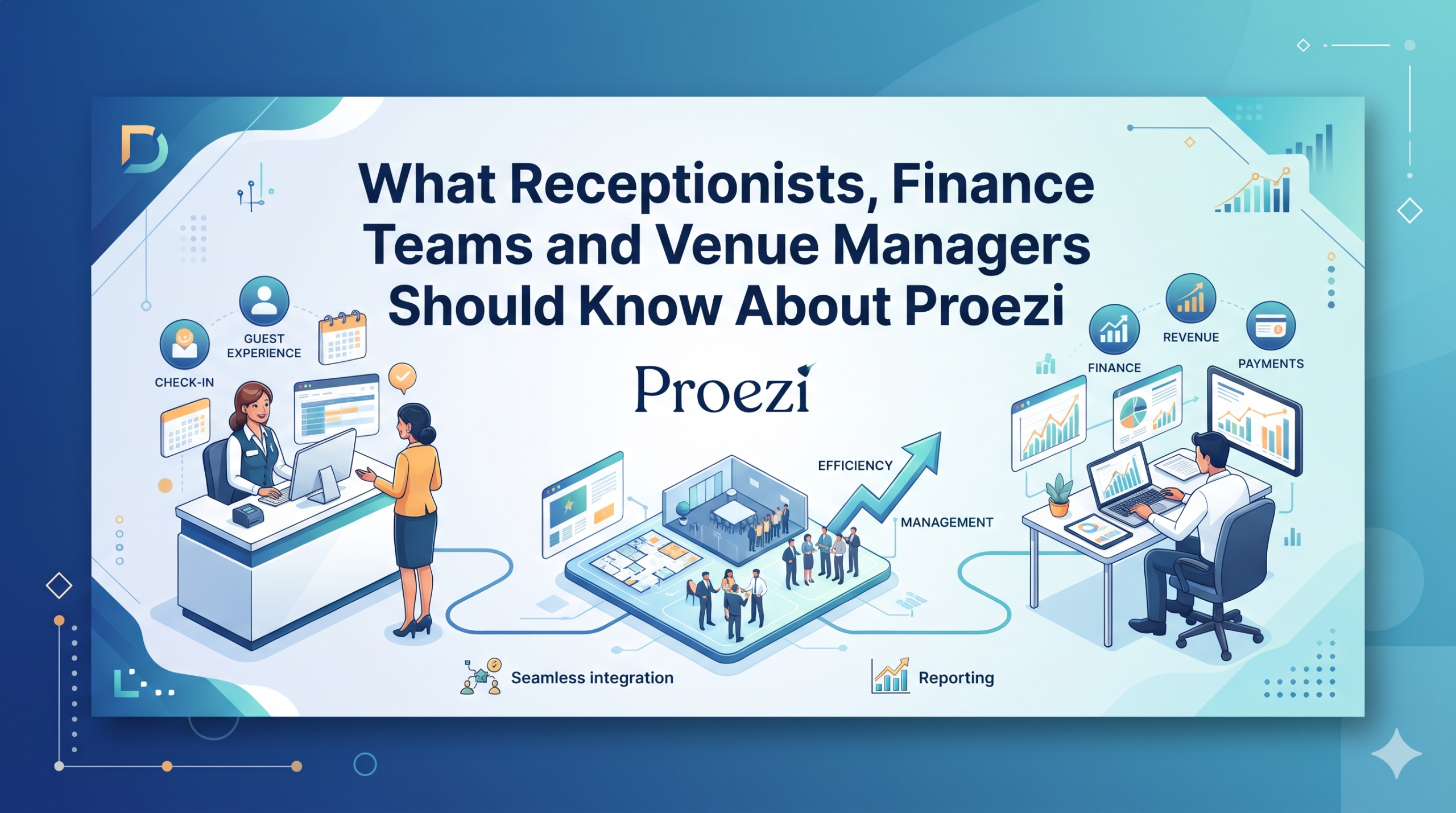
Information is shared by many different people inside a single organization, and each person tends to share a different kind. The front desk gives directions. The accounts team gives bank details. The procurement team gives company records. Because these tasks sit in separate corners of the business, the same problems repeat in each one without anyone seeing the full picture.
Proezi is a web-based platform that lets organizations publish digital visitor arrival instructions, payment details and business identity information as dedicated pages, then share them through reusable links and QR codes. This article looks at it role by role, so each reader can see which part matters to their own work.
A Role-Based Look at Daily Needs
The scenarios below are typical situations described in general terms. They are not customer stories.
Reception and Front Desk Teams
Front desk staff are often the first to feel the effect of unclear directions. Phone calls arrive from visitors who are outside but cannot find the door. Staff walk people through gates, parking and lifts again and again.
A published arrival page removes much of this load. It can describe parking and entrance directions for visitors, the security check, the reception desk, the lift and the final room, with photographs and landmarks to help people recognize each stage. It can also carry an emergency contact button for visitors who still need help, and temporary notices for the day's changes. Reception then handles the exceptions rather than every arrival.
Event and Venue Organizers at Work
Organizers deal with several groups at once: guests, speakers, exhibitors and delivery crews. Each group needs a different entrance and a different set of instructions.
Proezi allows separate routes for drivers, pedestrians, taxis, deliveries and visitors who need step-free access. An event venue directions QR code can be printed on tickets, entry boards and car park signs so that people reach the right route from the place where they are standing. If a hall changes or a gate closes, the organizer updates a notice, and the printed code continues to work.
Finance and Accounts Staff Handling Payments
Accounts teams want customers to pay correctly and quickly. The common obstacle is not the payment itself but finding accurate details to pay into.
A payment details page lets the team share bank details with customers through one reusable link. It can include bank transfer instructions, account holder names, account details, UPI information, PayPal details and supported international identifiers, together with a payment-purpose reference so that the payer knows what to enter. Customers can copy the details instead of retyping them. A UPI QR code payment page can be printed for a counter or added to an invoice.
One point deserves emphasis for finance readers. Proezi does not process, collect or transfer payments. It is not a bank, a wallet or a gateway. The customer completes the payment in their own banking or payment application, and the business confirms receipt through its own banking channels.
Procurement and Vendor Management Teams
Buyers, banks and larger partners often ask suppliers for the same background records. Suppliers respond by searching old files and sending documents one at a time.
An identity page offers a calmer alternative. It lets a business share business registration details online through one link, including a registered name, a company registration identifier, a tax number and related information. Supported identifiers go through format and checksum validation, which checks structure and mathematical rules. The platform does not verify ownership or registration status with a government authority. Procurement teams receiving such a page should still confirm the details with the official registry before making important decisions.
Facility and Property Management Teams
Property managers look after buildings with many visitors and many occupants. A strong how to find us page for business can be created for each building or unit, so visitors reach the right tenant without asking the lobby staff. Floor and room directions, accessibility notes and alternative routes can all be added, and a single update corrects every future visit.
What a Visitor Experiences on Arrival
From the visitor's side, the process is short. They receive a link or see a QR code, open it in their browser and read the steps. No app needs to be installed and no account is required.
The first part of the trip happens outdoors, where visitors can open Google Maps, Apple Maps or Waze to reach the site. The last part, often called last mile navigation for businesses, is where the published instructions take over. They show which entrance to use, how to pass the gate, where reception is and how to reach the destination. Directions can be offered in several languages, and directions opened earlier may remain available on the device if the connection is weak.
Platform Features That Support These Roles
- Reusable links and QR codes for each page.
- Step-by-step instructions with annotated photographs, map coordinates and landmarks.
- Separate routes for different types of visitor.
- Emergency contact buttons and temporary notices.
- Multilingual directions and previously cached offline directions.
- Copyable payment details, payment-purpose references and printable payment signs.
- Validation of supported business identifiers.
- Arrival cards that can be embedded on a business website.
These features make it function as visitor wayfinding software, with the important note that it works through published instructions rather than live indoor tracking.
Clearing Up Common Assumptions Early
- A QR code opens a page. It does not guide a person through a building by satellite.
- A payment page displays information. It does not move money.
- A checksum check shows that a number follows its rules. It does not prove that a company exists.
- Customer-created pages are kept out of search indexing. They are for direct sharing and not for attracting new customers through search.
- A page stays useful only while someone maintains it.
Privacy and Accuracy Practices Worth Adopting
Because these pages can hold payment and company details, good habits matter.
- Review every detail against an original source before publishing.
- Share payment and identity pages with the people who need them.
- Avoid exposing personal banking information by accident.
- Test each QR code before printing signs.
- Update access notices as soon as a route or gate changes.
- Remove details that are no longer correct.
Signs That the Pages Are Working
A business can observe its own results without relying on outside figures. Useful signs include fewer calls to reception asking for directions, fewer messages asking for account details, shorter delays at the gate and fewer repeated requests from partners for the same records. Teams may want to note these before and after introducing a page, so that they can see what has genuinely improved.
Brief Answers to Further Questions
Can delivery drivers get their own route?
Yes. Separate arrival routes can be published for deliveries, along with notes for gates and loading areas.
Are printable payment signs available?
Yes. Payment pages support QR codes and printable payment signs.
Does the platform handle refunds or disputes?
No. Because it does not process payments, such matters are handled between the business and the customer through their banking channels.
Can pages be placed on our website?
Arrival cards can be embedded on a business website, and links and QR codes can be shared in emails and on printed signs.
Is Proezi suitable for international businesses?
It is designed for international use, and visitors open pages directly in a browser. Because payment methods and business identifiers vary by country, businesses should check that their own are supported.
A Closing Note on Clear Information
Clear information shows respect for the people who rely on it. A visitor who finds the door without calling, a customer who pays to the right account and a partner who receives the correct company details have all been helped by someone who took the trouble to write it down properly. Proezi gives each team a single place to do that, and it is straightforward about its limits, since it shares information without handling payments or certifying companies. The best results will come from teams that agree who owns each page, check facts at their source and review them regularly, so that the page remains as accurate on the hundredth visit as it was on the first.