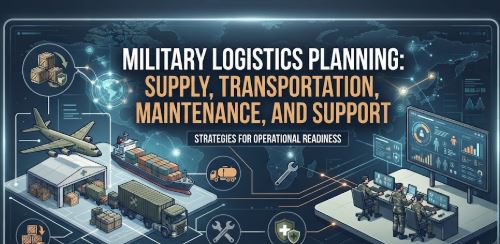
Military Logistics Planning: Supply, Transportation, Maintenance, and Support
WarOpsX serves as a comprehensive educational platform designed to help students, researchers, and defense enthusiasts explore complex military and security concepts. Rather than focusing on tactical combat instruction, the platform provides structured resources centered around how large defense systems operate, adapt, and evolve. Understanding these frameworks requires examining several interconnected disciplines, including military strategy, defense studies, logistics, organizational design, and technological integration. By breaking down these core subjects, learners can build a solid foundation for comprehending how national security objectives connect with operational planning, resource management, and decision-making structures.
What Is WarOpsX?
WarOpsX.com is a specialized educational website dedicated to exploring military strategy, defense studies, operational concepts, emerging technologies, and organizational frameworks. The platform aims to demystify complex defense environments by providing clear, structured explanations of how various military and strategic components interact.
Its primary purpose is educational. It offers insights into how high-level political and military objectives translate into operational reality. The platform covers a wide range of subjects designed for individuals seeking to deepen their understanding of modern defense organizations. Rather than acting as a promotional site or a news outlet, WarOpsX functions as an informational knowledge base. It helps readers connect dots between historical developments, organizational structures, logistics networks, and modern technological advancements without relying on complex academic jargon or sensationalism.
Why Is WarOpsX Relevant for Defense and Military Education?
Studying defense and military systems requires more than memorizing historical battles or weapon specifications. Modern defense organizations are complex ecosystems where strategy, operations, logistics, and technology are deeply intertwined. A breakdown in one area—such as supply chain sustainment or communication flow—can severely impact overall organizational readiness.
WarOpsX is relevant because it provides structured guidance on these interconnected components. By examining how command structures coordinate with intelligence networks, or how technological innovations influence organizational design, learners gain a holistic view of security studies. This comprehensive approach helps students and researchers understand that military power is not just about combat capability, but about the seamless integration of strategy, resource management, and institutional readiness.
Military Strategy
Military strategy forms the bedrock of defense planning, bridging national political goals with the application of military power. At its core, strategy involves determining how to use available resources to achieve long-term objectives while managing risk and uncertainty.
Strategic thinking requires leaders to look beyond immediate engagements and consider broader geopolitical dynamics, economic capabilities, and alliance structures. Effective strategy aligns ends (objectives), ways (concepts of action), and means (resources). Throughout history, strategic thought has evolved from simple territorial conquest to complex deterrence models, grand strategy, and multi-actor security frameworks. Studying strategy helps learners understand why campaigns are launched, how objectives shift during changing geopolitical conditions, and how leadership decisions shape the ultimate outcome of conflicts.
Defense Studies
Defense studies is an interdisciplinary academic field that explores security, military organizations, conflict, and peace. Unlike narrow tactical studies, defense studies encompasses a broad spectrum of topics, including international relations, defense economics, military sociology, institutional history, and policy analysis.
Researchers in defense studies examine how nations prepare for security challenges, how defense budgets are allocated, and how military organizations adapt to shifting global environments. This field encourages critical thinking about policy formulation, civil-military relations, and the ethical dimensions of defense planning. By engaging with defense studies, learners gain analytical tools to evaluate security policies objectively and understand the multifaceted pressures influencing national decision-makers.
Military Operations
Military operations translate abstract strategic goals into concrete actions. This domain encompasses the planning, coordination, and execution of campaigns, missions, and day-to-day activities conducted by defense organizations.
Understanding operations requires looking at how forces are deployed, maneuvered, and sustained across various theaters. It involves operational art—the tactical execution of specific missions combined with broader strategic design. Operations depend heavily on synchronization, ensuring that land, maritime, air, and other units work toward common objectives without working at cross-purposes. Clear command relationships and structured planning cycles are essential to managing the complexity of modern operational environments.
Military Logistics
Military logistics is often described as the backbone of any defense organization. Without effective logistics, even the most brilliant strategy or advanced technology cannot succeed. Logistics covers the entire lifecycle of resource management, including procurement, supply chain networks, transportation, maintenance, medical support, and field infrastructure.
Sustainment ensures that units have the fuel, ammunition, spare parts, and provisions necessary to maintain operational readiness over extended periods. Logistics planning requires forecasting future needs, managing vast inventories, and maintaining resilient supply lines that can withstand disruptions. Studying military logistics reveals the immense administrative and organizational effort required to support large-scale defense operations across vast geographical distances.
Command and Control Systems
Command and Control (C2) systems refer to the combination of leadership, organizational structures, communication networks, and information management tools that allow leaders to direct forces. Effective C2 ensures that decision-makers maintain situational awareness and can issue timely, coherent directives down the chain of command.
C2 involves establishing clear lines of authority, defining responsibilities, and ensuring reliable communication flows between headquarters and subordinate units. In complex environments, information management is critical to prevent decision fatigue and ensure that relevant data reaches the right personnel. Command and control bridges the gap between human leadership and technical communications infrastructure.
Defense Technology
Defense technology encompasses the wide array of tools, equipment, and digital systems used by modern military organizations. This field includes traditional hardware like armored vehicles and aircraft, as well as modern innovations such as artificial intelligence, autonomous systems, advanced sensors, secure communications networks, simulation software, and cyber capabilities.
Technology significantly influences how organizations gather information, communicate, and execute operations. However, technology alone does not guarantee success; it must be integrated with effective training, sound organizational structures, and robust logistics. Studying defense technology helps learners understand the capabilities and limitations of modern systems and how digital transformation impacts strategic decision-making.
Military History
Military history provides the empirical foundation for understanding how defense systems have evolved over time. By examining past campaigns, technological transitions, organizational reforms, and strategic failures or successes, historians and analysts can identify enduring patterns and lessons.
History shows how armies and navies adapted to new challenges, how leadership styles influenced outcomes, and how institutional inertia often hindered necessary reforms. Studying military history prevents analysts from viewing current security challenges in isolation, offering valuable context on how institutional culture and strategic doctrine develop across generations.
Military Organizational Structure
Military organizational structure defines the formal hierarchy, command relationships, unit types, and institutional frameworks that govern defense forces. From small tactical units to large joint commands, structure dictates how responsibility is divided and how authority flows.
Hierarchical models ensure clear accountability and disciplined execution, while modern joint force structures encourage cooperation across different service branches, such as land, naval, and air forces. Understanding organizational design is essential for explaining how large groups of people coordinate their efforts, share information, and maintain institutional stability.
Multidomain Operations
Multidomain operations represent the evolution of warfare and defense strategy across multiple distinct environments simultaneously: land, maritime, air, space, cyber, and the information domain. In the past, military planning often focused on a single primary domain, such as land or sea.
Modern defense environments require seamless coordination across all domains. For example, satellite communications support naval navigation, cyber networks protect critical infrastructure, and air assets coordinate with ground forces. Understanding multidomain operations helps learners grasp how contemporary security challenges require integrated planning and cross-domain synergy.
Intelligence Surveillance and Reconnaissance
Intelligence, Surveillance, and Reconnaissance (ISR) systems are vital for gathering, processing, and analyzing information to support decision-making. Surveillance involves systematic observation of areas of interest, while reconnaissance focuses on specific information-gathering missions.
Intelligence transforms raw data into actionable insights by evaluating enemy capabilities, terrain, weather, and potential risks. Effective ISR provides leaders with situational awareness, helping them anticipate challenges, allocate resources efficiently, and reduce uncertainty during strategic planning.
How These Defense Areas Connect
The subjects covered by WarOpsX do not exist in isolation; they form a deeply interconnected continuum. A flaw in one link can compromise the entire defense framework.
Military Strategy ➔ Military Operations ➔ Military Logistics ➔ Command and Control ➔ Information ➔ Defense Technology ➔ Organizational Readiness
This sequence demonstrates how high-level goals translate into operational plans, which depend entirely on logistics and robust command systems. Furthermore, technology and information flow continuously through these stages, shaping how decisions are made.
Similarly, historical study informs strategy and organizational development:
Military History ➔ Strategic Learning ➔ Organizational Development ➔ Modern Defense Concepts
By studying historical precedents, modern institutions refine their doctrines, adapt their structures, and prepare for future security environments.
Key Elements Covered by WarOpsX
- Strategy: High-level planning aligning national goals with military means.
- Operations: The execution and coordination of military missions and campaigns.
- Logistics: Supply chains, maintenance, and resource sustainment.
- Command and Control: Leadership structures, communication, and decision-making frameworks.
- Technology: Advanced hardware, software, sensors, and cyber capabilities.
- History: Past campaigns, institutional evolution, and strategic lessons.
- Organizational Structure: Hierarchies, unit types, and joint command models.
- Multidomain Environments: Interaction across land, sea, air, space, and cyber domains.
- Intelligence and Information: ISR systems, data analysis, and situational awareness.
- Defense Studies: Interdisciplinary academic analysis of security, policy, and conflict.
Benefits of Learning These Defense Concepts
Developing a solid understanding of military and defense concepts offers several distinct advantages for learners:
- Expands vocabulary to discuss international security and defense policy accurately.
- Improves comprehension of historical events and their long-term institutional impacts.
- Clarifies the relationship between political objectives and military capabilities.
- Deepens insight into how large organizations manage complex supply chains and logistics.
- Enhances appreciation for the role of technology and information systems in modern organizations.
- Bridges the gap between academic theory and practical defense administration.
Step-by-Step Approach to Studying Military and Defense Systems
Step 1: Start With Basic Terminology
Begin by learning common defense and strategic terms to build a solid foundational vocabulary.
Step 2: Understand Military Strategy
Explore how political goals translate into strategic concepts and long-term planning frameworks.
Step 3: Study Military Operations
Examine how strategic ideas are structured into operational plans and coordinated across units.
Step 4: Learn About Military Organizational Structure
Investigate military hierarchies, command relationships, and joint force models.
Step 5: Understand Military Logistics
Study the principles of supply chains, sustainment, transportation, and maintenance.
Step 6: Study Information and Command Systems
Explore how communication networks, leadership, and situational awareness support decision-making.
Step 7: Examine Technology and Multidomain Environments
Analyze modern digital tools, sensors, and the interaction between land, sea, air, space, and cyber domains.
Step 8: Use Military History to Connect the Concepts
Review historical case studies to see how these concepts developed and interacted over time.
Common Mistakes When Studying Military and Defense Topics
- Studying technology in isolation: Focusing exclusively on weapons specs without understanding the strategic context or logistics required to support them.
- Ignoring logistics: Overlooking the vital role of supply chains, maintenance, and resource management in military success.
- Treating history as a list of battles: Memorizing dates and casualty numbers while ignoring institutional, strategic, and technological evolution.
- Confusing strategy and tactics: Mixing up broad long-term objectives with immediate operational actions.
- Ignoring organizational structure: Overlooking how command relationships and bureaucracy affect decision-making and communication.
- Treating information separately from command: Failing to see how intelligence and C2 systems integrate directly with leadership.
- Assuming technology guarantees victory: Believing that advanced equipment overrides poor strategy, logistics, or leadership.
- Neglecting historical context: Applying modern assumptions to past conflicts without considering period-specific constraints.
- Treating defense domains independently: Viewing land, sea, air, space, and cyber environments as completely separate rather than interdependent.
Practical Tips for Students and Researchers
- Begin with core terminology glossaries before diving into complex strategic doctrines.
- Compare historical campaigns with modern operational challenges to identify recurring themes.
- Study strategy and operations as a paired concept rather than separate subjects.
- Draw organizational charts to visualize how command relationships function.
- Track how logistical constraints influenced famous historical turning points.
- Follow developments in defense technology and information systems through credible academic sources.
- Take structured notes highlighting the relationships between logistics, technology, and strategy.
- Read across multiple academic perspectives to avoid single-source bias in defense studies.
Who Can Benefit from WarOpsX's Educational Content?
Students
Students exploring international relations, political science, or modern history can use structured educational resources to grasp fundamental defense concepts and organizational frameworks.
Researchers
Researchers benefit from organized subject breakdowns that provide clear analytical categories for studying military history, defense economics, and institutional structures.
Defense Studies Learners
Individuals pursuing specialized learning in defense studies can utilize comprehensive overviews to connect strategic theory with practical operational realities.
Policy Learners
Policy-focused readers gain a clearer understanding of how military strategy, organizational readiness, and technology intersect with national security decision-making.
Defense Technology Professionals
Professionals working with defense technologies can contextualize their technical expertise within broader operational, logistical, and strategic environments.
Defense Enthusiasts and General Readers
General readers seeking to expand their knowledge can build a rigorous, high-level understanding of military history, strategy, and modern defense systems without wading through overly dense academic texts.
Real-World and Historical Context
Historical examples illustrate the vital connection between these defense disciplines. During the mid-20th century, large-scale industrial conflicts demonstrated that military success depended as much on manufacturing capacity, logistics networks, and supply chain sustainment as it did on battlefield tactics. The introduction of mechanized transport and radio communication fundamentally transformed Command and Control systems, allowing leaders to manage dispersed forces across wider geographic areas.
In modern contexts, the integration of digital networks, space-based assets, and advanced sensors has created complex Multidomain Operations environments. Analyzing these historical and contemporary developments shows that defense systems are dynamic institutions requiring continuous adaptation across strategy, technology, and organizational design.
Modern Developments in Defense Systems
Contemporary defense environments are shaped by rapid technological evolution and complex geopolitical dynamics. Artificial intelligence and advanced data analysis tools are increasingly utilized to process vast streams of information gathered by Intelligence, Surveillance, and Reconnaissance (ISR) networks. These tools assist analysts in managing situational awareness and supporting decision-making processes.
Furthermore, the growing importance of cyber capabilities and space infrastructure has expanded the boundaries of Multidomain Operations. Modern organizations must coordinate actions across traditional physical domains as well as digital and orbital environments. Educational platforms like WarOpsX help learners make sense of these shifts by examining how emerging technologies interact with established principles of strategy, logistics, and organizational structure.
Frequently Asked Questions (FAQs)
What is WarOpsX and what topics does it cover?
WarOpsX is an educational platform dedicated to exploring military strategy, defense studies, operations, logistics, command systems, technology, history, organizational structure, multidomain environments, and intelligence frameworks. It provides structured resources to help readers understand how these complex defense components connect.
Why is military strategy important to study?
Military strategy connects overarching political and national objectives with the practical application of military power. Studying strategy helps learners understand how leaders manage resources, assess risk, and formulate long-term plans to achieve security goals.
What does defense studies encompass?
Defense studies is an interdisciplinary field covering security policy, military history, organizational sociology, defense economics, and international relations. It offers broad analytical frameworks for evaluating how nations prepare for and manage security challenges.
How do military operations relate to strategy?
Military operations translate abstract strategic goals into concrete, actionable plans. Operations involve the coordination, movement, and execution of missions by defense organizations to achieve specific objectives set by higher strategy.
Why is military logistics considered crucial?
Logistics encompasses supply chains, transportation, maintenance, and sustainment. Without robust logistical support, defense organizations cannot maintain operational readiness or sustain campaigns over extended periods, making logistics a foundational pillar of military success.
What are Command and Control (C2) systems?
Command and Control systems combine leadership, organizational structures, communication networks, and information management tools. They enable leaders to maintain situational awareness and direct subordinate units effectively.
How is defense technology changing modern organizations?
Defense technology introduces advanced tools such as artificial intelligence, autonomous systems, secure communications, and cyber capabilities. These technologies influence how organizations gather information, communicate, and execute strategic decisions.
What can we learn from military history?
Military history provides empirical examples of past campaigns, technological transitions, and institutional reforms. Studying history helps analysts identify enduring patterns, strategic lessons, and the evolution of military systems.
What are Multidomain Operations?
Multidomain operations refer to the coordinated application of military capabilities across land, maritime, air, space, cyber, and information environments. Modern defense studies emphasizes cross-domain interaction as a core component of security planning.
How do Intelligence, Surveillance, and Reconnaissance (ISR) support decision-making?
ISR systems collect, monitor, and analyze information about operational environments. By transforming raw data into actionable intelligence, ISR provides leaders with the situational awareness needed to reduce uncertainty and support informed decision-making.
Conclusion
Understanding modern defense and military systems requires looking beyond isolated tactical details and examining how multiple disciplines interact. Platforms like WarOpsX provide valuable educational frameworks for exploring military strategy, defense studies, operations, logistics, command systems, technology, history, organizational structures, multidomain environments, and intelligence networks. By studying these interconnected subjects together, learners develop a comprehensive view of how defense organizations function, adapt, and sustain themselves in an increasingly complex world.