Why Robot Fleet Security Gets Overlooked Until Something Goes Wrong
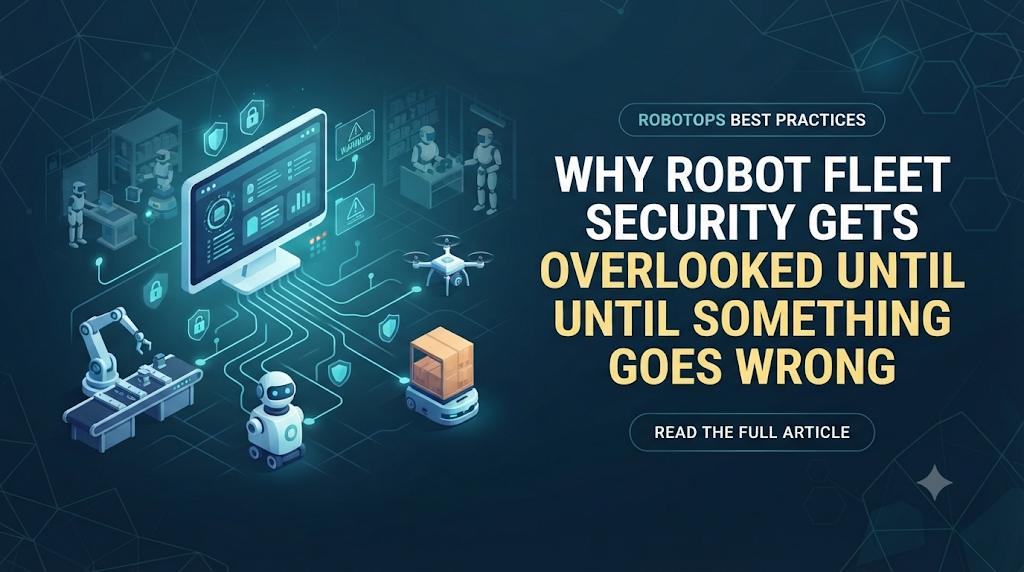
A robotics operations lead once described their security setup like this: "We locked down the servers years ago. Nobody thought about the robots."
That gap is more common than most people realize. Companies spend years hardening their networks, laptops, and cloud accounts. Then they roll out a fleet of connected robots and treat them like appliances instead of computers on wheels, sending and receiving data all day long.
That's a mistake, because a robot is basically a small computer with sensors, motors, and a network connection. If that connection isn't protected, it's an open door.
What Robot Fleet Security Actually Covers
Robot fleet security means protecting every robot's connection, software, and data from unauthorized access or tampering, not just protecting the central system that manages them.
This includes several layers:
- Device identity – making sure each robot is who it claims to be on the network.
- Data encryption – protecting information as it travels between the robot and the control system.
- Access control – limiting who can send commands to a robot or change its settings.
- Firmware integrity – confirming that software updates come from a trusted source and haven't been altered.
Miss any one of these, and the whole fleet becomes vulnerable, even if the rest is solid.
Why This Matters More Than People Expect
A single laptop getting compromised is bad. A robot getting compromised can be worse, because robots interact with the physical world.
A hijacked delivery robot could be redirected. A compromised warehouse robot could collide with shelving or workers. A tampered industrial arm could damage equipment or products. These aren't hypothetical horror stories, they're the same categories of risk that show up whenever any internet-connected device gets ignored during security planning.
There's also a quieter risk: data theft. Robots often carry cameras, location data, and operational details. If that data isn't encrypted, it can be intercepted without anyone noticing for a long time.
How Robots Typically Get Exposed
Weak or default credentials. Some robots ship with generic passwords that never get changed after setup. It's the same mistake that's caused breaches in routers and IoT devices for years.
Unencrypted communication. If a robot sends data over the network in plain text, anyone with network access can read or alter it in transit.
Outdated firmware. Manufacturers release security patches, but if nobody applies them, known vulnerabilities stay open indefinitely.
Flat networks. When robots sit on the same network as everything else, one compromised device can potentially be used to reach other systems.
A Practical Example
Picture a hospital using autonomous delivery robots to move supplies between departments. If those robots authenticate with the same shared password across the entire fleet, one leaked credential compromises every robot at once.
Now picture the alternative: each robot has a unique identity, credentials rotate automatically, and traffic is encrypted end to end. A leaked password on one unit becomes a contained problem instead of a fleet-wide one.
The difference isn't more robots or better robots. It's better structure around the ones already in use.
Common Mistakes Teams Make
Assuming robots are "just hardware." Robots run software like any other device. They need the same security discipline as a server or laptop.
Skipping regular firmware updates. Manufacturers patch vulnerabilities, but patches only help if they actually get installed on schedule.
Ignoring network segmentation. Robots don't need unrestricted access to every part of a company's network. Isolating them limits the blast radius if something does go wrong.
No audit trail. Without logs of what commands were sent to a robot and when, it's nearly impossible to investigate an incident after the fact.
Best Practices Worth Adopting
- Give every robot a unique identity instead of shared credentials.
- Encrypt data both in transit and, where relevant, at rest.
- Apply firmware updates on a set schedule rather than reactively.
- Separate robot traffic from general office or guest networks.
- Keep logs of commands and configuration changes for every unit.
- Review access permissions periodically, especially after staff changes.
None of this requires exotic tools. It's closer to standard IT security practice than anything robotics-specific, just applied to a category of devices that often gets left out of the conversation.
For teams building out a broader operations approach around this, RobotsOps covers related fleet management and robotics operations topics worth reading alongside this one.
FAQs
Is robot security really different from regular IT security?
Not fundamentally. The principles are the same, identity, encryption, access control, patching. The difference is that robots are often overlooked when these policies get written.
Do small fleets need to worry about this, or just large ones?
Even a handful of robots can be an entry point into a larger network if they're not secured. Fleet size affects the scale of the problem, not whether it exists.
What's the first step for a team that hasn't addressed this yet?
Start with credentials and firmware. Replace default passwords, confirm devices are running current firmware, and go from there.
Conclusion
Robots don't need to be treated as a special category of risk, but they do need to be treated as a real one. The same basics that protect servers and laptops, unique credentials, encryption, timely updates, apply here too.
Skipping that step doesn't just risk downtime. It risks physical safety, data exposure, and trust in the systems a company depends on every day.